.png)
Introduction
The global push toward carbon neutrality is reshaping the energy industry, steering it toward low-carbon, intelligent, and sustainable solutions. The integration of wind, solar, storage devices, and electric vehicles is challenging grid stability and reliability. To address these challenges, coordinated management and optimization of generation, grid, load, and storage are essential. This demands advanced technological innovations and higher management standards. AI technologies, particularly machine learning and deep learning, are emerging as key drivers, automating and optimizing power systems at unprecedented levels.
AI in Power Systems
AI’s application in the energy sector has a long history. Traditional AI methods such as expert systems and neural networks have provided critical support for grid planning and maintenance. Today, advanced AI techniques like reinforcement learning and transformer-based models are expanding their influence, offering solutions to complex, nonlinear, and time-sensitive challenges in power system management.
AI Innovations in Power Systems
1. Advanced Load Forecasting
Accurate load forecasting is critical for grid planning and operation. Conventional models struggle with multifactorial influences such as weather, policy shifts, and consumer behavior. AI techniques like deep learning have revolutionized this field. For example, Long Short-Term Memory (LSTM) networks and Transformer models have demonstrated up to 20% improvement in predictive accuracy over traditional methods. This precision enables utilities to optimize generation schedules and plan upgrades more effectively.
2. Equipment Maintenance and Diagnostics
The maintenance of transmission and distribution equipment is crucial for grid reliability. AI-powered tools such as computer vision and natural language processing can process vast amounts of heterogeneous data to detect faults and predict failures. A real-world application by QAES reduced equipment downtime by 30% while increasing diagnostic accuracy by 25%, enhancing system stability and safety.
3. System Optimization and Dispatch
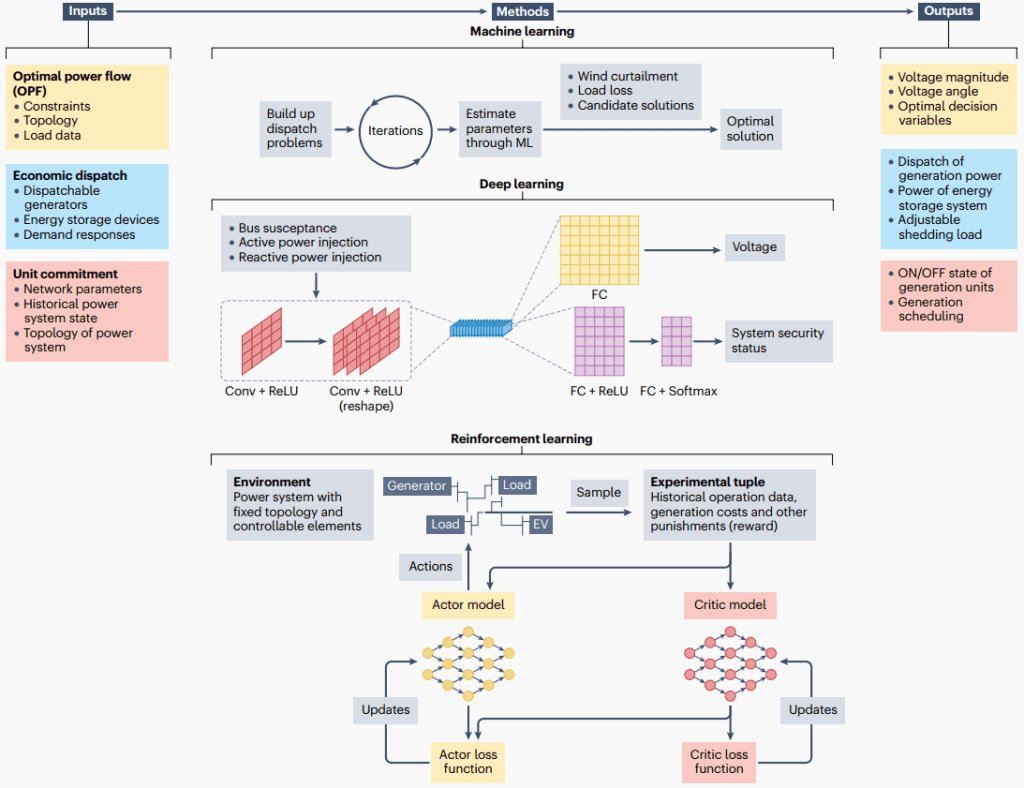
AI enhances power system dispatch by addressing the complexities introduced by distributed energy resources (DERs). Algorithms such as reinforcement learning adaptively manage uncertainties from intermittent sources like solar and wind. For instance, an AI-optimized dispatch system improved grid efficiency by 15%, reducing operational costs and emissions.
4. Power Market Transactions
Energy trading is highly dynamic and influenced by numerous variables, including weather, market demand, and policy changes. AI-driven models, particularly those using reinforcement learning, autonomously develop bidding strategies, improving market competitiveness. A notable case study demonstrated a 10% increase in trading revenue through AI-enabled predictive modeling and strategy optimization.

QAES’s AI Initiatives
- Technical Innovations
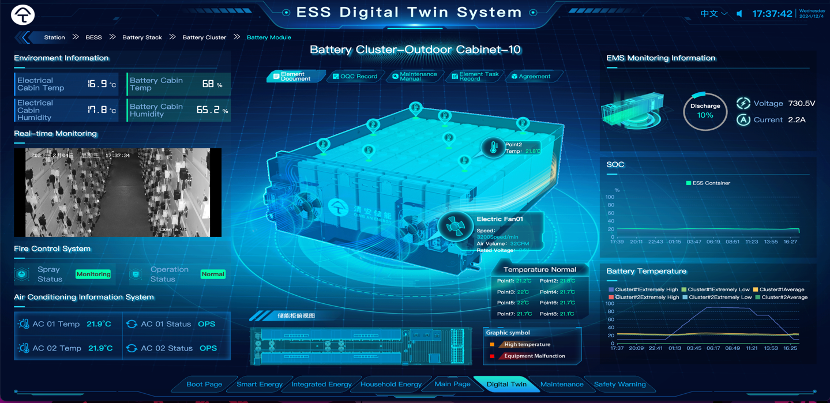
Battery Safety Monitoring: AI-driven models analyze operational data in real-time, identifying anomalies and predicting battery health with 95% accuracy, significantly mitigating safety risks.
Demand Forecasting: Using LSTM and iTransformer algorithms, QAES has achieved a 20% improvement in predicting peak loads, providing robust support for demand-side management.
Energy Trading Optimization: AI systems model market behaviors and optimize bidding strategies, increasing transaction success rates by 12%.

Integrated Energy Solutions: AI coordinates photovoltaic systems, storage units, and EV charging infrastructure to achieve a 15% improvement in energy utilization.
- Case Studies
Smart Energy Storage System: QAES intelligent energy storage solutions leverage AI for continuous monitoring, predictive maintenance, and fault diagnostics, reducing system downtime by 30% and operational costs by 20%.

Virtual Power Plant Platform: By integrating AI and big data analytics, the platform aggregates and optimizes DERs. It predicts user demand with 95% accuracy and enables real-time load adjustments, reducing peak demand charges by 15%.
Future Prospects
- Industry Trends
AI is set to play a critical role in the continued evolution of power systems, driving improvements in:
- Distributed Energy Resource Integration: Advanced algorithms will enable seamless integration of solar, wind, and storage, enhancing grid flexibility.
- Cybersecurity: AI will bolster grid defenses, identifying and mitigating threats in real-time.
- Blockchain Synergies: AI and blockchain will ensure transparency and security in energy trading, streamlining market operations.
- QAES AI Outlook
QAES aims to lead the “AI + Power” revolution with initiatives focused on:
- Thermal Runaway Prevention: Developing AI models to predict and prevent battery thermal events.
- Market Participation: Enhancing storage station engagement in ancillary services and energy markets.
- Optimized Dispatch: Maximizing the economic and operational efficiency of virtual power plants.
By integrating cutting-edge AI technologies, QAES is committed to pioneering advancements in power systems, ensuring safety, efficiency, and sustainability.